


We develop the best technologies for recycling materials to find innovative solutions for the energy and ecological transition
STOKKERMILL | SELTEK SRL © 2023 | P. Iva. IT02360630301 | Privacy | Terms








The recent debate, reignited by an article in Sole 24 Ore, has put the spotlight on the fate of the millions of single-use coffee pods consumed every day. The major development concerns their classification: they are no longer considered generic waste or e-waste but are now officially classified as “packaging.” This regulatory shift requires a complete rethinking of urban and industrial waste management. To turn this requirement into an opportunity, it’s crucial to understand how modern technologies—such as those developed by Stokkermill—allow for efficient coffee pod recycling by separating aluminum from organic waste.
The implementation of the new European Packaging Regulation (PPWR) marks a decisive turning point. Since coffee pods are primarily made of aluminum or plastic, they now fully fall under the packaging stream. This means that volumes of sorted collection are set to skyrocket: it’s no longer a matter of handling small voluntary drop-offs but massive flows from household collection.
The coffee waste recycling industry now faces an unprecedented logistical challenge: recovery centers must be capable of processing tons of mixed material, often contaminated with liquids and organic residues, which older, generic shredders cannot efficiently valorize.
In the face of this “flood” of material, technological upgrades become the only viable path to remain competitive. Facility operators must invest in specialized coffee pod recycling machines capable of industrial-scale processing. Reducing the waste volume is no longer enough; the components must be separated and reintroduced into the market.
Companies that invest today in a dedicated coffee pod recycling plant position themselves ahead of the competition, ready to respond to new tenders and the demands of industry consortia, which will increasingly require higher purity standards for recovered materials.
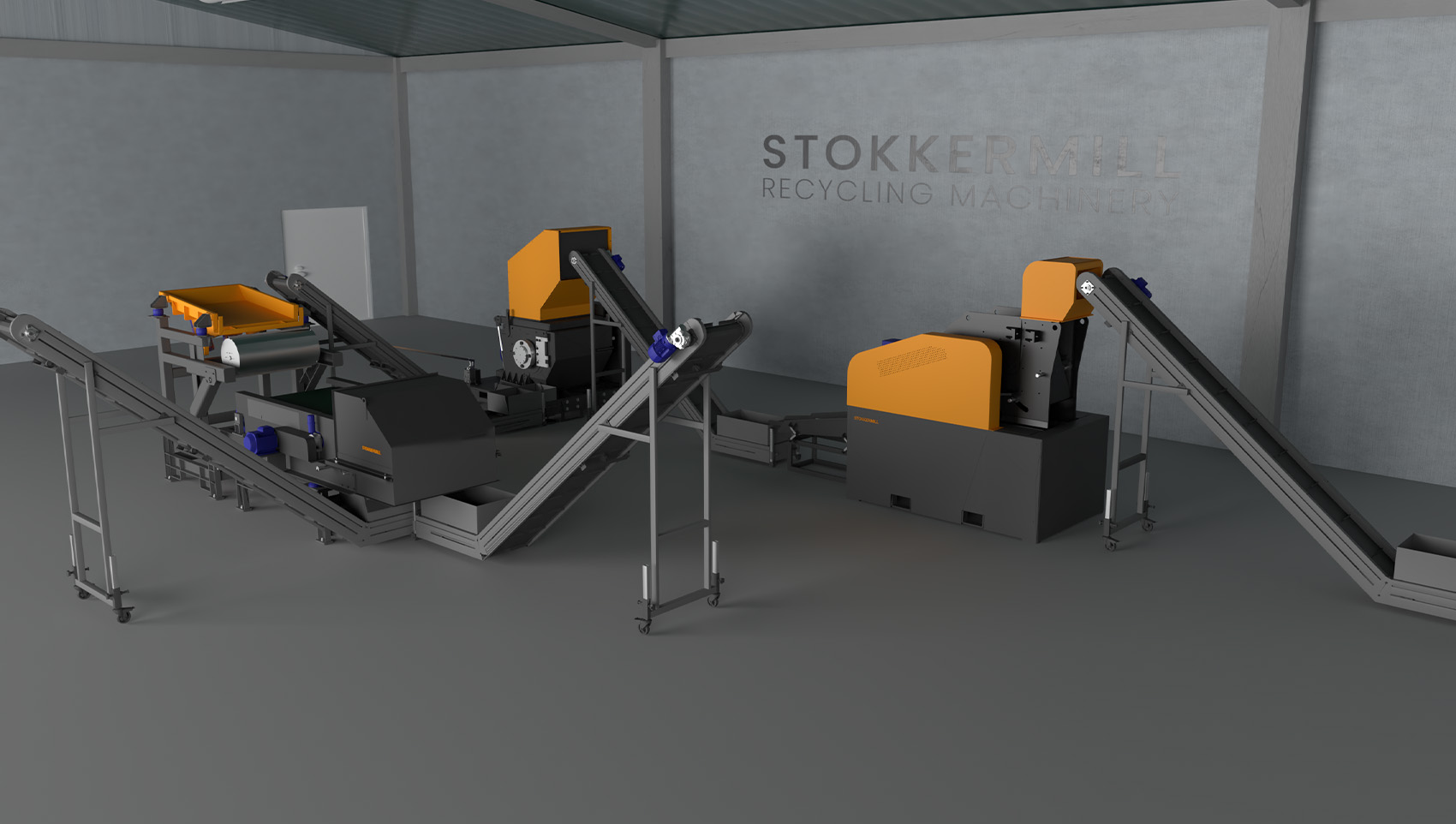
The technical complexity of recycling coffee pods lies in their “hybrid” nature: a lightweight aluminum shell filled with compact, wet coffee.
Using hammer mills and advanced delamination systems, coffee pod materials are separated mechanically and dry, without the use of water. The process crushes the pods, releases the coffee grounds (which are vacuumed and filtered), and isolates the aluminum. This technological approach ensures that the organic fraction does not contaminate the metal, and vice versa, solving the main issue that has historically limited the recovery of these packaging materials.
The most compelling aspect for investors is the economic value generated by aluminum recovery. Aluminum is a metal that can be recycled infinitely without losing its properties. However, smelters will only pay full market price for “clean” aluminum.
Stokkermill’s coffee pod recycling technologies are specifically engineered to achieve this: the output is oven-ready aluminum granules, free of plastics or burned coffee residues, with immediate high commercial value.
Beyond aluminum sales, a modern coffee pod recycling plant can also valorize the organic fraction. Used coffee, once cleaned of plastic impurities, becomes an excellent resource for high-quality compost or fuel pellets.
This dual valorization means that investing in Stokkermill machinery pays off on two fronts: the sale of valuable metals and the recovery of biomass for energy or agricultural use—creating a profitable, circular economy model.
02/02/2026
This website uses cookies
We use cookies to improve user experience, analyse site traffic and personalise content. By clicking "Accept all" you consent to the use of all cookies. You can manage your preferences via "Cookie settings". For more information, read our Cookie Policy.
Strictly necessary cookies
Required for the website to function. No consent needed.
Analytics cookies
Google Analytics — anonymous statistics about site usage.
By continuing to browse without making a selection, you consent only to strictly necessary cookies. Read our Privacy Policy and Cookie Policy. You can update your preferences at any time from the footer of this website.