


We develop the best technologies for recycling materials to find innovative solutions for the energy and ecological transition
STOKKERMILL | SELTEK SRL © 2023 | P. Iva. IT02360630301 | Privacy | Terms








The growing demand for rare earth elements (REE) and critical raw materials is driving the development of advanced, sustainable and water-free mineral processing technologies. In this context, electrostatic separation is gaining renewed attention as a key dry beneficiation method for fine particles and complex mineral mixtures.
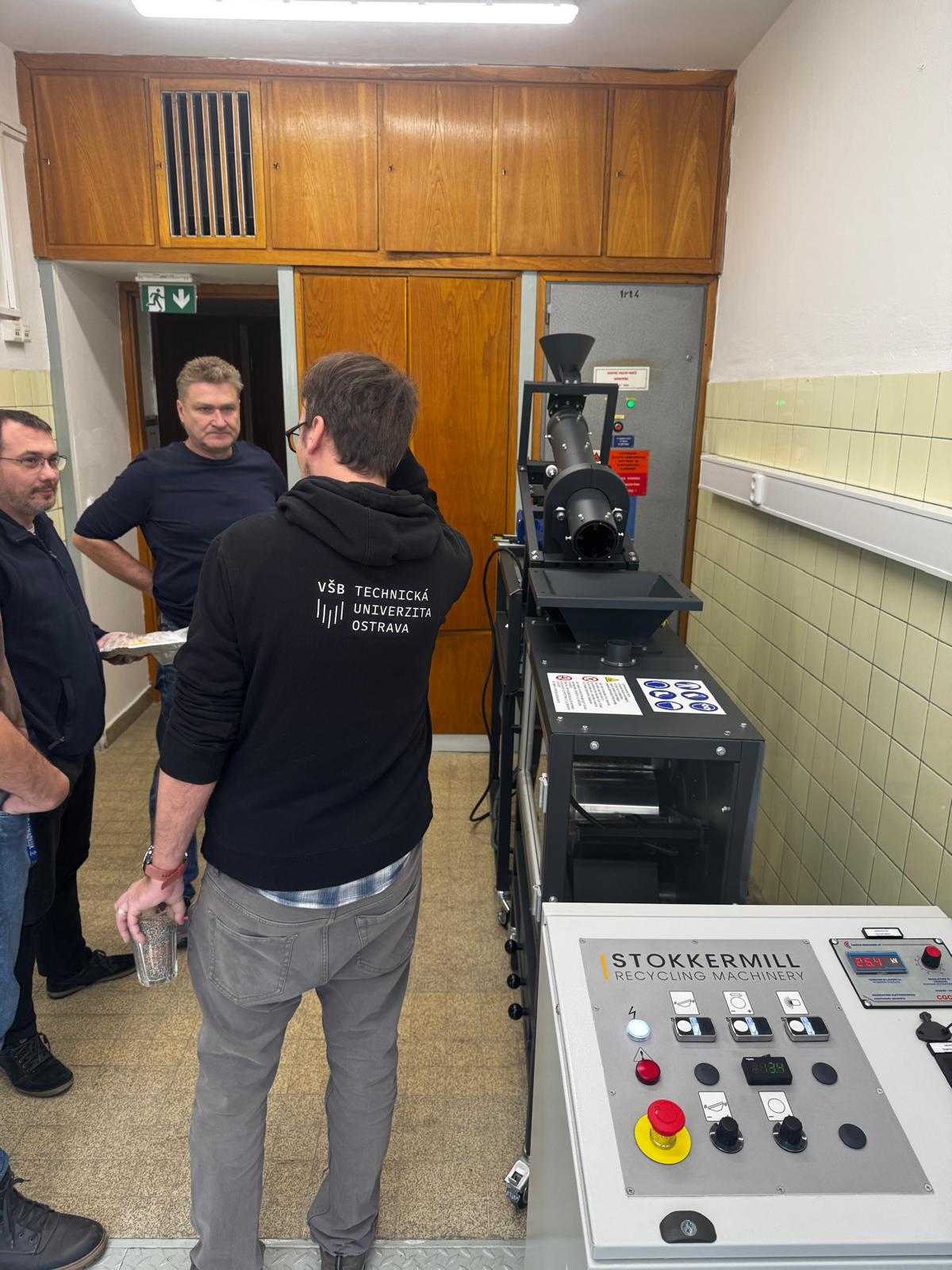
Stokkermill has recently supplied a laboratory electrostatic separator and a triboelectric charging system to the Department of Mineral Processing at VSB – Technical University of Ostrava, one of Europe’s leading academic institutions in the field of mining and mineral engineering.
This installation represents a strategic step in the development of innovative separation processes for:
• rare earth minerals
• critical raw materials
• secondary resources and tailings
• fine particle beneficiation
and confirms the role of StokkermillLab technologies as a platform for scientific research and process scale-up.
Electrostatic separation is based on the difference in electrical conductivity and surface charging behaviour of mineral particles. Unlike traditional wet processes, it enables dry beneficiation, drastically reducing:
• water consumption
• chemical reagents
• environmental impact
For research activities, the Stokkermill laboratory electrostatic separator allows:
• precise control of the electric field
• adjustment of mechanical and process parameters
• reproducible test conditions
• real-time monitoring and data acquisition
These features are essential for the development of new flow sheets in the field of rare earth element beneficiation, where the mineralogical complexity and fine grain size require high-selectivity separation techniques.
Electrostatic separation is particularly effective in the study of:
• conductive vs non-conductive mineral systems
• pre-concentrated heavy mineral sands
• REE-bearing phases after physical pre-treatment
• industrial minerals and high-purity concentrates
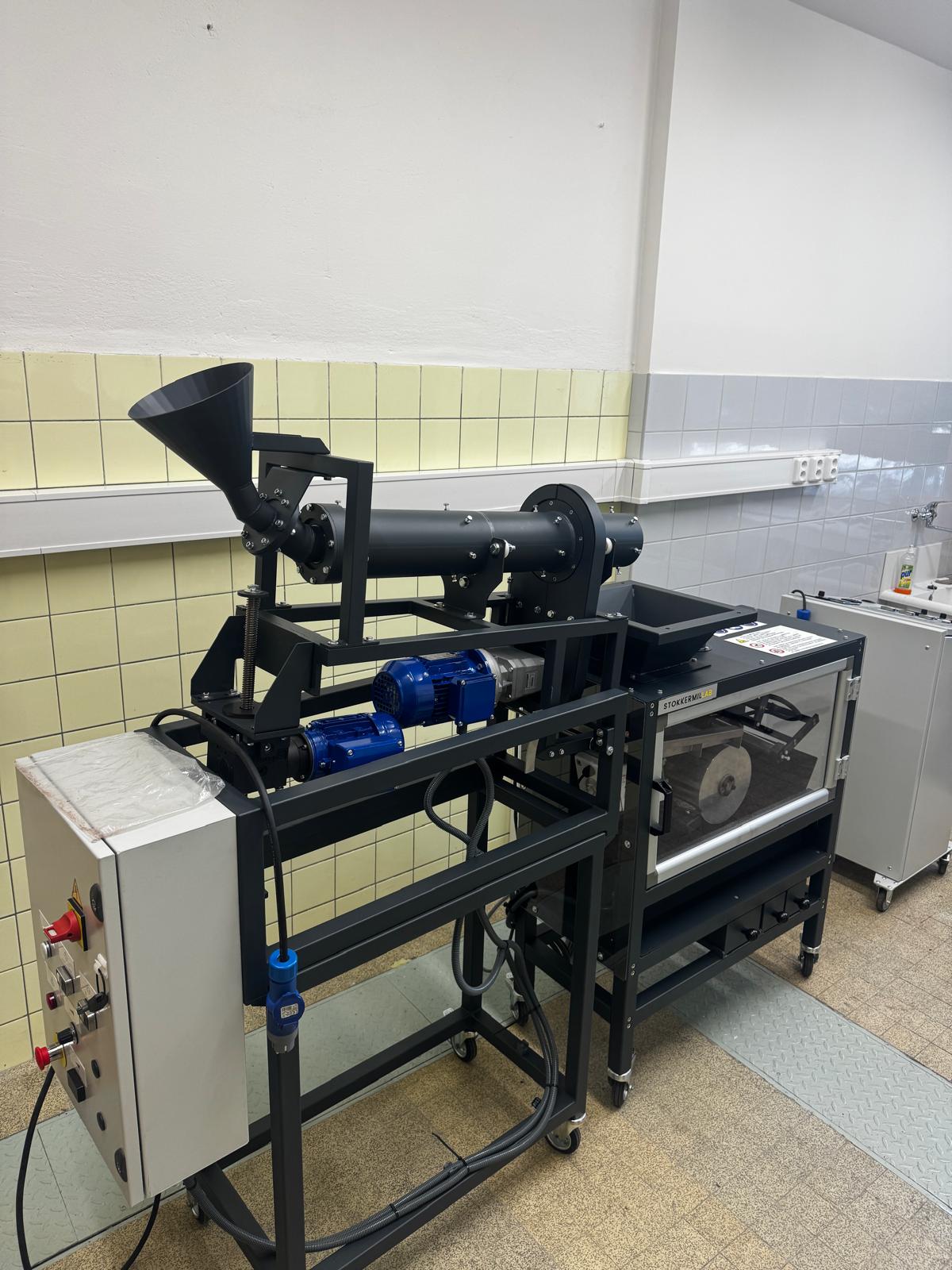
The efficiency of electrostatic separation on fine particles strongly depends on the quality and stability of the electrical charge acquired by the material.
The Stokkermill triboelectric charger installed at VSB enables controlled particle charging through frictional contact, allowing researchers to investigate:
• surface electrical properties of minerals
• particle–particle and particle–wall interactions
• influence of granulometry on charge distribution
• effects of moisture and environmental conditions
This is particularly relevant for rare earth minerals, where differences in surface chemistry – rather than conductivity alone – play a decisive role in the separation mechanism.
Triboelectric separation is increasingly studied as a potential solution for:
• dry beneficiation of REE ores
• separation of complex oxide and silicate systems
• recovery of valuable elements from mining residues
• upgrading of low-grade deposits
One of the main challenges in mineral processing research is the transfer of laboratory results to industrial scale.
StokkermillLab equipment is designed to:
• simulate continuous industrial processes at laboratory scale
• generate scalable and reproducible process parameters
• support the design of full-scale separation plants
For a research centre such as VSB – Technical University of Ostrava, this means the possibility to:
• develop innovative beneficiation routes for rare earth elements
• test dry processing alternatives to flotation
• optimise pre-concentration stages
• study the behaviour of new and unconventional raw materials
The global energy transition and the rapid growth of high-tech industries are dramatically increasing the demand for rare earth elements. At the same time, the mining sector is facing critical challenges:
• declining ore grades
• increasing processing costs
• water scarcity
• stricter environmental regulations
Dry electrostatic and triboelectric separation technologies offer a concrete response to these issues by enabling:
• water-free mineral processing
• low energy consumption
• high selectivity on fine particles
• treatment of secondary raw materials
For REE research, these technologies open new perspectives in the beneficiation of:
• monazite and xenotime concentrates
• complex REE-bearing ores
• recycling streams containing rare earth elements
The installation at the VSB – Technical University of Ostrava strengthens the connection between academic research and industrial innovation.
Universities and research centres require flexible, high-precision and fully controllable equipment to explore new process routes. StokkermillLab systems are designed exactly for this purpose: not only as laboratory machines, but as integrated research tools for the development of next-generation mineral processing technologies.
This project confirms Stokkermill’s role as a technological partner for:
• mineral processing research
• rare earth element beneficiation studies
• development of sustainable separation processes
• validation of scalable industrial solutions
The combination of a laboratory electrostatic separator and a triboelectric charging unit provides a complete platform for the study of electrical-property-based separation.
Its applications go beyond the mining sector and include:
• recycling of high-tech materials
• recovery of critical raw materials from industrial waste
• development of advanced powders and functional materials
With this installation, Stokkermill contributes to the advancement of scientific research on rare earth elements and sustainable mineral processing, supporting the transition toward more efficient, dry and environmentally responsible technologies.
This website uses cookies
We use cookies to improve user experience, analyse site traffic and personalise content. By clicking "Accept all" you consent to the use of all cookies. You can manage your preferences via "Cookie settings". For more information, read our Cookie Policy.
Strictly necessary cookies
Required for the website to function. No consent needed.
Analytics cookies
Google Analytics — anonymous statistics about site usage.
By continuing to browse without making a selection, you consent only to strictly necessary cookies. Read our Privacy Policy and Cookie Policy. You can update your preferences at any time from the footer of this website.