


We develop the best technologies for recycling materials to find innovative solutions for the energy and ecological transition
STOKKERMILL | SELTEK SRL © 2023 | P. Iva. IT02360630301 | Privacy | Terms





Recent reports, including influential insights from Il Sole 24 Ore, highlight a definitive trend: solar energy is experiencing "vertiginous growth," cementing its status as the most convenient and cost-effective energy source globally.
With solar energy now recognized as "the most affordable source in the world" and installations constantly on the rise, Stokkermill responds to the challenge with its StokkermillSolar solution.
Every panel installed today is a panel that will need to be recycled tomorrow. The recycling industry must gear up now to handle these unprecedented volumes.
At IFAT 2026 in Munich, Stokkermill Recycling Machinery stands at the forefront of this transition, presenting advanced, industrial-scale solutions designed to turn this looming environmental burden into a profitable resource.

Recycling solar panels is not merely about shredding; it is about precision separation and engineering resilience. The primary challenge in PV recycling is the presence of glass and glass powders, materials that are highly abrasive and notorious for wearing down standard machinery in record time.
StokkermillSolar solution, showcased at IFAT, is engineered specifically to withstand these harsh conditions. Unlike generic shredders adapted for the task, our equipment features:
• Specific Design Adaptations: Geometries and workflows designed to minimize wear.
• Premium Materials: Use of Hardox and specific abrasion-resistant alloys for all components in contact with glass and glass dust.
• Delamination Technology: Advanced delamination mills (such as the XRS series) that effectively separate glass from the polymer sandwich without compromising the quality of the recovered materials.
A key differentiator of the Stokkermill Solar Line is its industrial pragmatism.
The market is flooded with solutions that appear effective in a laboratory but fail in a recycling plant. Many competitors still rely on obsolete methods, such as labor-intensive frame removal followed by roller or cylinder delamination.
These outdated systems suffer from a fatal flaw: they typically require the panel to be intact and flat. However, in the real world, End-of-Life panels arrive broken, bent, crushed, or dirty.
Stokkermill’s approach is purely physical and mechanical. By utilizing high-energy impact and density separation, our system processes panels in any condition. We have moved beyond the fragility of rollers to the robustness of impact mills, ensuring high throughput and continuous operation where other systems would jam or require excessive maintenance.
In a fluctuating market, versatility is key to ROI. A dedicated solar line must be profitable even when solar feedstock varies.
Stokkermill’s engineering team has developed the Solar line to be a flexible asset. With specific implementations and complementary equipment, the StokkermillSolar solution transforms into a multi-purpose hub capable of processing:
1. WEEE Category R4: Electronic waste requiring careful handling and separation.
2. Light Aluminum Scrap: Processing of profiles, cans, and mixed siding with high efficiency.
This versatility ensures that Stokkermill clients are not just buying a machine for today’s needs, but investing in a plant capable of adapting to future market trends.
Visitors to the Stokkermill stand at IFAT Munich will discover that we do not offer "off-the-shelf" products for complex applications.
Whether it is a capacity of 1,500 kg/h or over 2,500 kg/h, every Stokkermill solution is:
• Bespoke: Designed around the client's specific logistic and material requirements.
• Tested: We encourage potential partners to visit operating plants (preferably in Italy) to see the technology in action before making a decision.
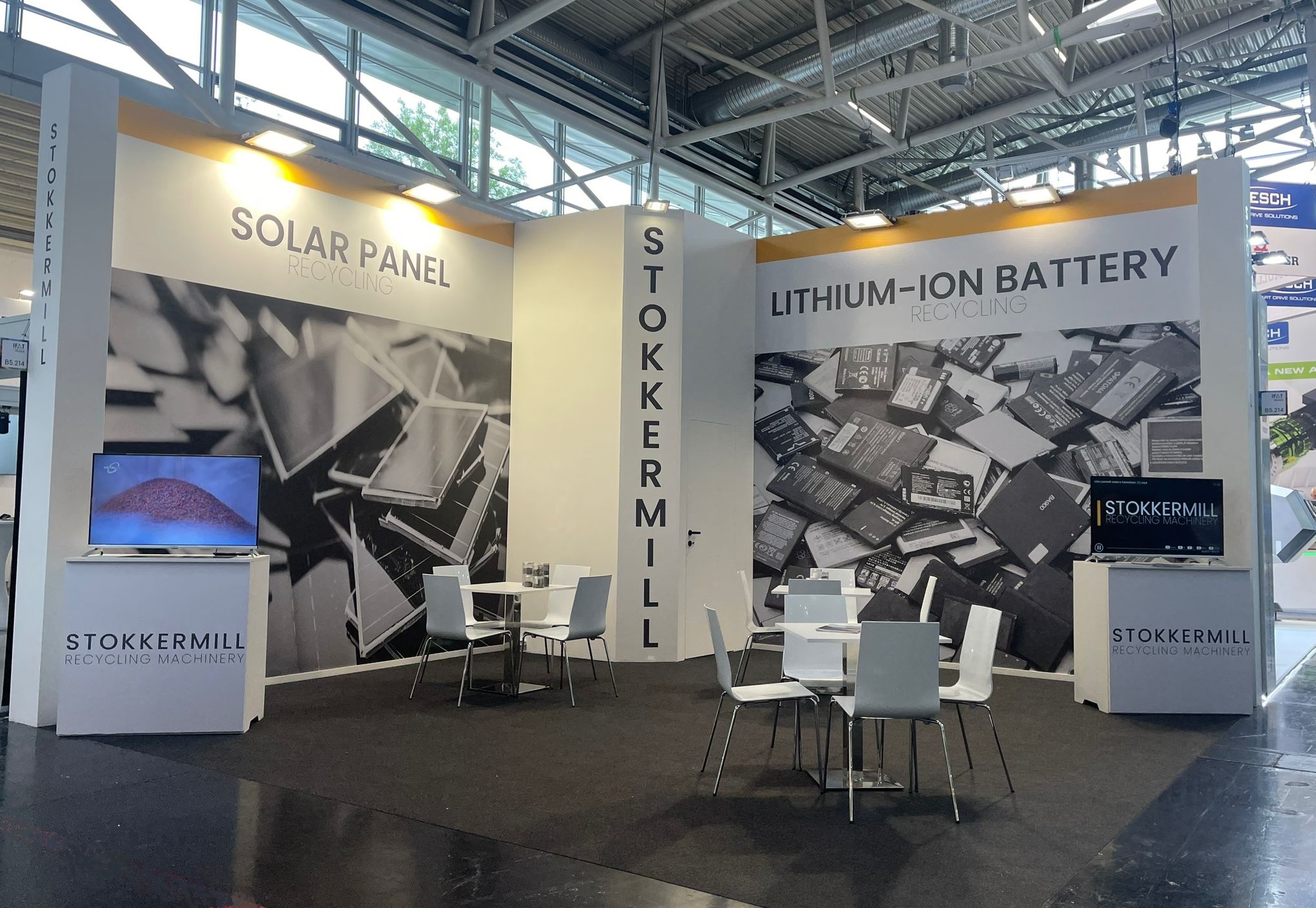
Stand: B6 210
The recovery of raw materials from renewable energy infrastructure is the next frontier of the circular economy.
We invite industry professionals, waste management companies, and investors to explore how Stokkermill is redefining the standards of the solar recycling industry.
Discover more about our technology:
Visit our website for technical literature and case studies: www.stokkermill.com
Stokkermill Recycling Machinery
Engineering the Future of Recycling
01/07/2026
This website uses cookies
We use cookies to improve user experience, analyse site traffic and personalise content. By clicking "Accept all" you consent to the use of all cookies. You can manage your preferences via "Cookie settings". For more information, read our Cookie Policy.
Strictly necessary cookies
Required for the website to function. No consent needed.
Analytics cookies
Google Analytics — anonymous statistics about site usage.
By continuing to browse without making a selection, you consent only to strictly necessary cookies. Read our Privacy Policy and Cookie Policy. You can update your preferences at any time from the footer of this website.