


We develop the best technologies for recycling materials to find innovative solutions for the energy and ecological transition
STOKKERMILL | SELTEK SRL © 2023 | P. Iva. IT02360630301 | Privacy | Terms








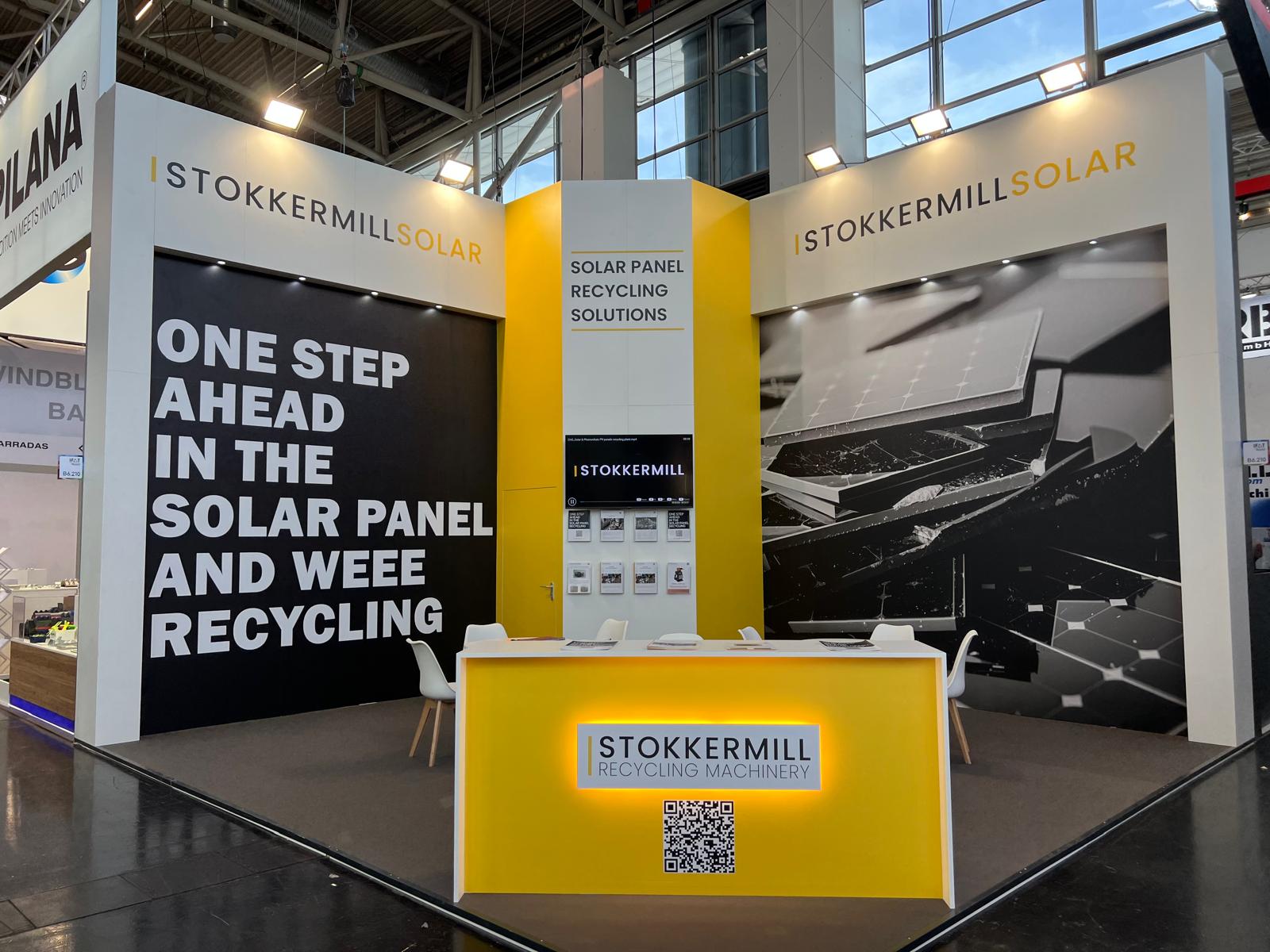
The solutions developed by Stokkermill are based on an integrated mechanical approach, engineered to process real-world modules, including damaged, unsorted panels or units sourced from different application contexts.
One of the key distinguishing features of this process is the elimination of preliminary manual operations, particularly the removal of the aluminium frame. Modules are processed directly, delivering significant advantages in terms of operational efficiency, cost reduction and process stability.
At the core of the process lies mechanical delamination, enabling the effective separation of the different layers that make up a photovoltaic module.
Following this stage, a combination of refining and separation technologies allows the recovery of multiple material fractions:
The integration of advanced separation systems — including eddy current separators, optical sorters and densimetric tables — further enhances the quality and value of the output materials.
Scalability is a key factor in the development of these solutions. Recycling plants can be configured according to processing capacity requirements and the desired level of automation, ranging from semi-automated systems to fully automated lines.
This flexible approach allows operators to progressively adapt their investment while aligning production capacity with evolving market demands.
Photovoltaic module recycling is rapidly evolving into a structured industrial sector, where reliability, operational continuity and the quality of recovered materials are critical success factors.
Participation at IFAT 2026 fits within this framework, with the aim of presenting advanced technical solutions and engaging with industry professionals and partners on real-world applications.
In the coming weeks, Stokkermill will also be exhibiting at:
These events offer further opportunities to explore developed technologies and discuss application-driven projects in real operational environments.

06/05/2026
This website uses cookies
We use cookies to improve user experience, analyse site traffic and personalise content. By clicking "Accept all" you consent to the use of all cookies. You can manage your preferences via "Cookie settings". For more information, read our Cookie Policy.
Strictly necessary cookies
Required for the website to function. No consent needed.
Analytics cookies
Google Analytics — anonymous statistics about site usage.
By continuing to browse without making a selection, you consent only to strictly necessary cookies. Read our Privacy Policy and Cookie Policy. You can update your preferences at any time from the footer of this website.