







Automatic tyre disassembler | T-Rec
Wheel disposal equipment. Tyre dismantling machine allows easy and automatic separation of vehicle tyres and rims.
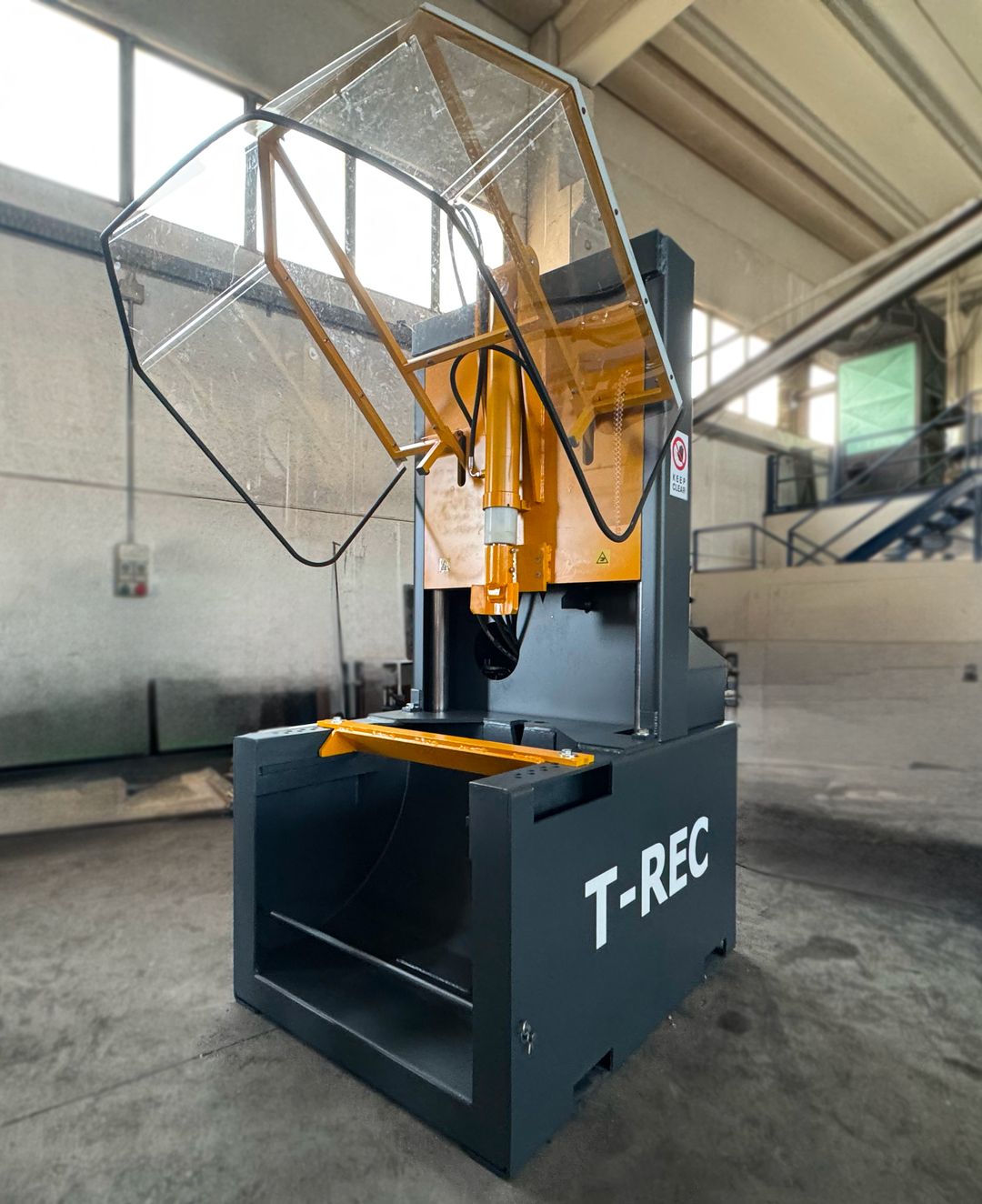
The recycling of end-of-life tires (ELTs) is one of the most strategic processes in modern waste management and material recovery. Every year, millions of tires are disposed of and must be processed using reliable and safe technologies. The first essential step is the separation between the rim and the tire, a process that allows rubber and metal to be correctly directed to their respective recovery streams.
T-Rec machines, designed and manufactured by Stokkermill, offer robust, fast, and highly reliable solutions for car dismantlers, ELT processing plants, and recycling companies that require a professional machine for rim/tire separation. T-Rec units can handle both steel rims and alloy (aluminum) rims, ensuring versatility and compatibility with the most common wheel types on the market.
Stokkermill Solutions for Tyre Recycling
The T-Rec range was developed to ensure:
• high performance,
• maximum operator safety,
• ease of use,
• long-term structural durability.
The automatic impact-resistant Lexan guard, fully transparent, ensures maximum visibility of the process while preventing any accidental contact during operation. The automatic opening and closing make the cycle linear, efficient, and repeatable.
On request, T-Rec machines can be configured with:
• a fully automatic cycle,
• conveyor belts for rim evacuation,
• tire removal systems,
• customized feeding solutions.
These options allow the T-Rec to be integrated into high-productivity ELT lines or into small dedicated plants.
Why separate the tire and rim with a professional machine
A proper industrial separation makes it possible to:
✔ Optimize rubber recycling
Ideal for producing granules and powders used in:
• modified asphalts,
• sports surfaces,
• anti-shock flooring.
✔ Efficiently recover metals
T-Rec machines handle both steel and alloy rims, ensuring materials ready for metallurgical recovery.
✔ Reduce transportation and handling costs
A tire without a rim takes up less space and weighs less.
✔ Properly prepare material for ELT shredding
Removing the rim before shredding improves productivity, energy consumption, and equipment longevity.
T-Rec Working Cycle
1. Wheel loading
The operator places the wheel on the worktable. T-Rec models can handle both steel and alloy rims up to 18” or 21”, depending on the version.
2. Automatic rim/tire separation
Once the cycle starts, the Lexan guard automatically lowers.
The mechanical system ejects the rim—regardless of whether it is steel or alloy—which slides into the chute or onto the evacuation conveyor.
The tire remains on the work surface for the next phase.
3. Automatic reset
The cycle ends with the guard automatically lifting, making the machine immediately ready for the next operation.
Each cycle lasts about 20 seconds, allowing for high hourly throughput.
T-Rec XL for the USA, Canada, Mexico, and Countries with Large Vehicles
The T-Rec XL model is particularly suitable for markets where large-format vehicles are widespread, such as:
• pickups,
• heavy-duty SUVs,
• light trucks,
• large commercial vehicles.
Countries like the United States, Canada, and Mexico use larger and more robust wheels compared to the traditional European market. Thanks to its ability to handle rims up to 21’’ and its higher installed power, the XL model is the ideal solution for these contexts.
Why Choose Stokkermill T-Rec
• Built in Europe with industrial-grade components
• Robust and durable machine
• Simple and intuitive operation
• Low maintenance requirements
• Optional automatic configuration
• Ideal for car dismantlers, ELT centers, and recycling lines
Request Information
Stokkermill provides technical support, spare parts, and customized solutions to integrate T-Rec into complete ELT recycling lines.
Contact us for configurations, quotes, or technical support.
