


We develop the best technologies for recycling materials to find innovative solutions for the energy and ecological transition
STOKKERMILL | SELTEK SRL © 2023 | P. Iva. IT02360630301 | Privacy | Terms








Material separation is one of the most critical aspects of modern recycling processes. Waste streams often contain mixed components that must be accurately isolated in order to be recovered and reintroduced into production cycles. Laboratory-scale separation tests make it possible to evaluate these technologies under controlled conditions, generating key technical data for the design of more efficient and sustainable industrial plants.
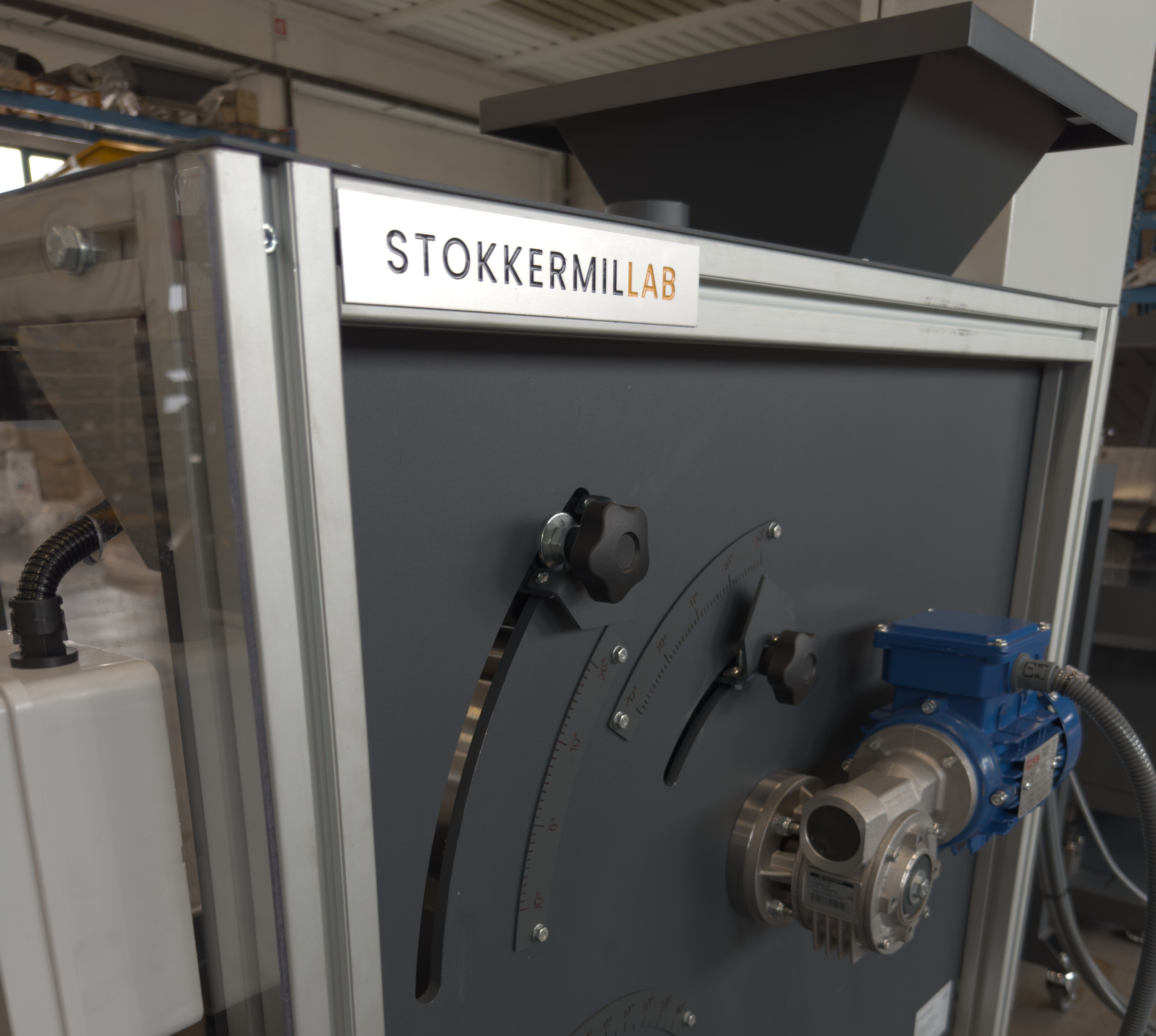
Before designing an industrial plant, it is essential to understand the characteristics of the materials to be processed. Laboratory testing of recyclable materials enables analysis of chemical composition, particle size distribution, and the presence of ferrous and non-ferrous metals. This information helps identify the most effective treatment process, select appropriate separation technologies, and reduce risks and costs associated with industrial investments.
In modern laboratories, precision equipment allows the application of various material separation technologies. Magnetic separation is used to recover ferrous metals, while eddy current separators isolate non-ferrous metals such as aluminium and copper by exploiting alternating magnetic fields. Electrostatic separation distinguishes materials with different electrical properties, such as metals and plastics, improving the purity of recovered fractions. Particle size classification, carried out using circular screens or precision sieving, divides materials into size classes, optimising the efficiency of downstream processes. Specialised laboratories such as StokkermilLab offer precision devices that integrate all these technologies in a reliable and repeatable way.
The use of precision equipment in material separation laboratories offers tangible benefits: verification of process feasibility, optimisation of operating parameters, and increased purity of recovered fractions. Advanced solutions, such as those provided by StokkermilLab, allow companies to develop more efficient and sustainable recycling processes, improving the overall performance of industrial plants.
This website uses cookies
We use cookies to improve user experience, analyse site traffic and personalise content. By clicking "Accept all" you consent to the use of all cookies. You can manage your preferences via "Cookie settings". For more information, read our Cookie Policy.
Strictly necessary cookies
Required for the website to function. No consent needed.
Analytics cookies
Google Analytics — anonymous statistics about site usage.
By continuing to browse without making a selection, you consent only to strictly necessary cookies. Read our Privacy Policy and Cookie Policy. You can update your preferences at any time from the footer of this website.